
Sunday, February 28, 2010
Tiny wolf spider searches in vain for an insect on February 28, 2010, in Fayetteville, Arkansas, parking lot
Please click on image to ENLARGE view of tiny wolf spider on February 28, 2010, in Fayetteville, AR.

Bayou Communities on Cox 34 now. Check the preview.
http://www.weather.com/multimedia/videoplayer.html?from=email&bcpid=823503751&bclid=1886155853&bctid=61558354001http://www.weather.com/multimedia/videoplayer.html?from=email&bcpid=823503751&bclid=1886155853&bctid=61558354001
Low-impact development gradually getting attention of builders
The Case for Low Impact Development

Studies show LID reduced annual phosphorous runoff at Hill Place by 53 percent, ntrogen by 27 percent and sediment by 22 percent as compared to conventional stormwater management.
By Loriee Evans
Published: February 22, 2010, 12:00am
 Comment
 Print Story
 Email to a Friend
 Share This Story
Related
 Inside a Green Home: A Revenue-Generating Residence
- Baldwin & Shell's New Headquarters Reap Perks of LEED
- Communities Turning Landfill Pollution Into Profit
- Eco-efforts Boost L'Oreal's Bottom Line
- Neighborhood Gardens Cultivate Communities in Arkansas
- Energy Savers: 9 Energy Fixes That Cost You $0
- Tracking Down $110 Million: The Green Portion of Arkansas' Economic Stimulus Funding
- 4 Arkansas Chefs Share Recipes With Locally Grown Foods
- Saving Trash Costs at the Office
- Arkansas Green Restaurant Alliance
Late in 2005, just off of the University of Arkansas campus in Fayetteville, 27 acres of land sliced by the Town Branch Creek lay barren. Plans for condominiums on the property were scrapped, leaving neighbors with an eyesore. “Trees had been removed up to the railroad, there was extra noise, extra wind, line of sight issues for some,” said Aubrey Shepherd, co-coordinator for the Town Branch Neighborhood Association in Fayetteville.
But it was worse when it rained. “There were some erosion issues for the railroad embankment,” Shepherd said, a sensitive issue since increased sediment flows could degrade the creek’s aquatic wildlife habitat and large storm flushes could wash out streambed habitat for aquatic invertebrates. And any silt and pollutants that entered the stream ended up in Beaver Lake — the source of Fayetteville’s drinking water.
The remedy came in 2007, when Place Properties purchased the land and hired Appian Centre for Design, a Fayetteville-based landscape planning and architecture company, to work on a student housing proposal. Appian hosted community meetings, which pinpointed water quality concerns, as they worked on the project’s landscape design and decided to employ low impact development for Hill Place as a result.
LID Explained
Low impact development (LID) uses or recreates natural landscape features to mimic predevelopment runoff patterns and allow water to slowly percolate into the subsoil, thereby treating storm water as a resource, not a waste product. “Con ventional development focuses on flood control” using concrete pipe and retention ponds, said John Coleman, Sustainability Director for the City of Fayetteville’s De partment of Sustainability. “LID focuses on water quality and water shed protection.
It also has some biodiversity benefits. It catches fertilizers, nitrogen, phosphorous, and holds them on-site, preventing them from going downstream.” A scientific analysis for Hill Place estimated that a low impact design system would reduce annual phosphorous runoff by 53 percent, nitrogen by 27 percent and sediment by 22 percent as compared to conventional gutter, pipe, and pond stormwater controls.
Typical bio-friendly stormwater management techniques might include rain gardens, bioswales, infiltrations islands and wetlands. Rain gardens, for example, are depressions planted with plant species that increase the soil’s ability to absorb rainwater. Bioswales are wide shallow ditches with vegetation or riprap; they are designed to slowly filter pollutants out of stormwater. Infiltration islands are basically rain gardens planted in parking lots, where they can clean up significant amounts of vehicular pollutants.
After a 2008-09 retrofit, three rain gardens and five bioswales now slow stormwater flow and filter water at Hill Place. Six infiltration islands filter parking lot runoff. A wooded riparian buffer lines the creek running through the property. In all, 24,000 square feet of LID greenery surrounds the apartment complex, which opened in August 2009 and comprises 16 buildings with 288 units.
Financial Factors
Construction of low impact design features is fairly basic — a homeowner could put in a rain garden — although there are certain techniques and plant species considerations, said Todd Jacobs, Appian’s Director of Design. Financially, LID might save a developer 10 percent to 40 percent compared to installing a traditional pipe system, depending on parameters such as topography and site density. With lots of green space available for bio-systems, for example, savings might be closer to 40 percent. A dense urban site might see savings closer to 10 percent.
However, Jacobs acknowledges that savings can be a wash if local ordinances favor traditional stormwater management, resulting in additional regulatory considerations and fees for the LID team. In Fayetteville, Place Properties was willing to commit to the extra design fees.
“If you can get away from the concrete, pipe and curb, and shift that to design fees, you can alleviate some of the design costs,” since traditional concrete features cost more to install than LID features, Coleman said. In 2008, the university received a grant for research on stormwater in Northwest Arkansas communities. “[The City of] Fayetteville is now taking that research and looking at the possibility of implementing LID,” he said. “It means [city ordinances] would allow for rain gardens and bioswales, where in the past, developers didn’t get credit for it.” Water quality in the Beaver Lake watershed is the driver behind the city’s efforts to make the transition to LID-friendly ordinances, he said. That would ultimately lower the planning costs for LID systems.
In fact, the Arkansas Department of Environmental Quality’s stormwater permitting language directs municipalities to “evaluate their existing codes and planning procedures to remove impediments to low impact development and green infrastructure.” Ron Tyne, managing member of Rocket Properties, which incorporates LID into its Little Rock development, said there’s been increasing acceptance of LID in the past 10 to 15 years. “There’s a whole lot of education that needs to be done, but once cities know the benefits, they more readily accept it and accommodate it.”
In terms of maintenance, costs are comparable to more traditional systems, according to Jacobs. “If the area wasn’t a bioswale, then it’d be a lawn needing to be fertilized and cut and mulched,” he said. “So the maintenance cost isn’t much more than a typical lawn situation.”
Meanwhile, there’s no denying the higher aesthetic appeal of green spaces incorporated into development design. The Environmental Protection Agency’s Web site lists increased property values, increased marketing potential and faster sales as benefits to the open green spaces of LID. “LID has been around, but when we look at mentor cities, we look at Seattle, Northern Virginia,” Coleman said. “It’s not really widespread — we’re pretty early in the process. You want to look at an existing project like Hill Place and try to learn the positives and negatives before you jump off.” It’s this kind of forward-thinking by the Hill Place team that earned the Appian Centre for Design a 2009 Award for Urban Planning & Design from the Arkansas Chapter of the American Society of Landscape Architects.
In making the award, the ASLA wrote, “We applaud the client for having the courage in undertaking such a project and suspect that the future success of the project will encourage other developers to follow suit.” Coleman and Jacobs are working in Fayetteville toward making that a reality.
But it was worse when it rained. “There were some erosion issues for the railroad embankment,” Shepherd said, a sensitive issue since increased sediment flows could degrade the creek’s aquatic wildlife habitat and large storm flushes could wash out streambed habitat for aquatic invertebrates. And any silt and pollutants that entered the stream ended up in Beaver Lake — the source of Fayetteville’s drinking water.
The remedy came in 2007, when Place Properties purchased the land and hired Appian Centre for Design, a Fayetteville-based landscape planning and architecture company, to work on a student housing proposal. Appian hosted community meetings, which pinpointed water quality concerns, as they worked on the project’s landscape design and decided to employ low impact development for Hill Place as a result.
LID Explained
Low impact development (LID) uses or recreates natural landscape features to mimic predevelopment runoff patterns and allow water to slowly percolate into the subsoil, thereby treating storm water as a resource, not a waste product. “Con ventional development focuses on flood control” using concrete pipe and retention ponds, said John Coleman, Sustainability Director for the City of Fayetteville’s De partment of Sustainability. “LID focuses on water quality and water shed protection.
It also has some biodiversity benefits. It catches fertilizers, nitrogen, phosphorous, and holds them on-site, preventing them from going downstream.” A scientific analysis for Hill Place estimated that a low impact design system would reduce annual phosphorous runoff by 53 percent, nitrogen by 27 percent and sediment by 22 percent as compared to conventional gutter, pipe, and pond stormwater controls.
Typical bio-friendly stormwater management techniques might include rain gardens, bioswales, infiltrations islands and wetlands. Rain gardens, for example, are depressions planted with plant species that increase the soil’s ability to absorb rainwater. Bioswales are wide shallow ditches with vegetation or riprap; they are designed to slowly filter pollutants out of stormwater. Infiltration islands are basically rain gardens planted in parking lots, where they can clean up significant amounts of vehicular pollutants.
After a 2008-09 retrofit, three rain gardens and five bioswales now slow stormwater flow and filter water at Hill Place. Six infiltration islands filter parking lot runoff. A wooded riparian buffer lines the creek running through the property. In all, 24,000 square feet of LID greenery surrounds the apartment complex, which opened in August 2009 and comprises 16 buildings with 288 units.
Financial Factors
Construction of low impact design features is fairly basic — a homeowner could put in a rain garden — although there are certain techniques and plant species considerations, said Todd Jacobs, Appian’s Director of Design. Financially, LID might save a developer 10 percent to 40 percent compared to installing a traditional pipe system, depending on parameters such as topography and site density. With lots of green space available for bio-systems, for example, savings might be closer to 40 percent. A dense urban site might see savings closer to 10 percent.
However, Jacobs acknowledges that savings can be a wash if local ordinances favor traditional stormwater management, resulting in additional regulatory considerations and fees for the LID team. In Fayetteville, Place Properties was willing to commit to the extra design fees.
“If you can get away from the concrete, pipe and curb, and shift that to design fees, you can alleviate some of the design costs,” since traditional concrete features cost more to install than LID features, Coleman said. In 2008, the university received a grant for research on stormwater in Northwest Arkansas communities. “[The City of] Fayetteville is now taking that research and looking at the possibility of implementing LID,” he said. “It means [city ordinances] would allow for rain gardens and bioswales, where in the past, developers didn’t get credit for it.” Water quality in the Beaver Lake watershed is the driver behind the city’s efforts to make the transition to LID-friendly ordinances, he said. That would ultimately lower the planning costs for LID systems.
In fact, the Arkansas Department of Environmental Quality’s stormwater permitting language directs municipalities to “evaluate their existing codes and planning procedures to remove impediments to low impact development and green infrastructure.” Ron Tyne, managing member of Rocket Properties, which incorporates LID into its Little Rock development, said there’s been increasing acceptance of LID in the past 10 to 15 years. “There’s a whole lot of education that needs to be done, but once cities know the benefits, they more readily accept it and accommodate it.”
In terms of maintenance, costs are comparable to more traditional systems, according to Jacobs. “If the area wasn’t a bioswale, then it’d be a lawn needing to be fertilized and cut and mulched,” he said. “So the maintenance cost isn’t much more than a typical lawn situation.”
Meanwhile, there’s no denying the higher aesthetic appeal of green spaces incorporated into development design. The Environmental Protection Agency’s Web site lists increased property values, increased marketing potential and faster sales as benefits to the open green spaces of LID. “LID has been around, but when we look at mentor cities, we look at Seattle, Northern Virginia,” Coleman said. “It’s not really widespread — we’re pretty early in the process. You want to look at an existing project like Hill Place and try to learn the positives and negatives before you jump off.” It’s this kind of forward-thinking by the Hill Place team that earned the Appian Centre for Design a 2009 Award for Urban Planning & Design from the Arkansas Chapter of the American Society of Landscape Architects.
In making the award, the ASLA wrote, “We applaud the client for having the courage in undertaking such a project and suspect that the future success of the project will encourage other developers to follow suit.” Coleman and Jacobs are working in Fayetteville toward making that a reality.
 aubrey James Shepherd
February 25, 2010 - 5:10 pm
Please see my lengthy response at http://aubreyshepherd.blogspot.com/2010/02/arkansas-business-story-useful.html
Saturday, February 27, 2010
Typical Illinois River tributary southwest of Fayetteville, Arkansas
Please click on individual images to ENLARGE view of stream that enters the Illinois River. This one is near a highway and shows signs of dumping of assorted material in the creek. Worse, however, is that Arkansas Highway and Transportation workers mow and then dredge out ditches from which water from the highway carries silt into the stream. That reduces the success of many native species that inhabit the stream. It is easy to haul out the junk and debris. But silt is difficult to remove. Neither should be in the stream. Thoughtless people dump the junk into creeks. Well-paid workers dredge the ditches and cause the erosion at taxpayer expense!


Friday, February 26, 2010
Why would a joy-rider with no license plate speed on Archibald Yell Boulevard, pass cars on the right and then appear not to be having a good time when finally forced to stop in traffic waiting for a light to change??
Please click on images to ENLARGE view of car speeding on Archibald Yell and College Avenue without a license plate on February 27, 2010.


Thursday, February 25, 2010
Hidden cost of hydraulic fracturing featured on CAT channel, Cox Cable 18 in Fayetteville, Arkansas
The morning of February 23, 2010, on Democracy Now (every weekday morning 7am CAT Ch. 18) Amy interviewed Josh Fox, the director of the new film, "Gasland."
He traveled about 10 states and discovered widespread pollution of groundwater by hydraulic fracturing. The or a connection to CCTF is the harm caused by the reckless search for additional fossil fuels. There are hidden costs in fracturing; the public needs to know the true costs in this and all energy sources. Also the corruption involved (another cost):
The 2005 Energy Bill exempted the natural-gas industry from the Safe Drinking Water Act especially to give free rein to fracking. Imagine the amount of money spent on campaign contributions and lobbying to produce that special corporate-interest legislature.
--
Dick Bennett
jbennet@uark.edu
He traveled about 10 states and discovered widespread pollution of groundwater by hydraulic fracturing. The or a connection to CCTF is the harm caused by the reckless search for additional fossil fuels. There are hidden costs in fracturing; the public needs to know the true costs in this and all energy sources. Also the corruption involved (another cost):
The 2005 Energy Bill exempted the natural-gas industry from the Safe Drinking Water Act especially to give free rein to fracking. Imagine the amount of money spent on campaign contributions and lobbying to produce that special corporate-interest legislature.
--
Dick Bennett
jbennet@uark.edu
Heritage Trail Partners' newsletter
Please click on each image to ENLARGE for full view and to read:


 Please click on image to view full page


Friday deadline for registered voters who live in Fayetteville, Arkansas, to apply for positions on one of the many city boards, commissions and committees
Contact the city clerk's office to apply.
Wednesday, February 24, 2010
Arkansas Business story useful promotion of low-impact development, but doesn't capture the difference between a best-laid plan and a mice-managed execution of the plan
Hill Place on Flickr
http://www.flickr.com/photos/7295307@N02/sets/72157601195951903/
I appreciate the article on low-impact development in Arkansas Business. And I agree that
the Appian landscape architect, James Gibson, and the civil engineer, Austin Rowser, and others on the Appian team back when the design work was done made a great effort; but I did explain to the Arkansas Business reporter who called me, and talked for at least an hour, that the low-impact features were in most cases not actually built right by the out-of-state contractors and that the landscaping workers who planted and mulched and such had no idea of what they were supposed to be doing to maintain LID status.
The rain gardens are shallow and small. The bioswales are shallow and small. Many street median areas that could have been bioswales are raised above street level and are actually concrete or red-dirt bottomed and none actually allows stormwater to soak into the original soil.
Appian's people and the developers who wanted so desperately to build student apartments were faced with a formerly magnificent wooded savanna and prairie wetland parcel that had already been dredged and filled for the failed Aspen Ridge site. The Appian folk had no idea what was there before the conventional designers destroyed the timber and decreased the riparian area to a very narrow strip of timber and removed all but a few selected trees on the site.
Three mobile home parks and about a dozen houses were on the the 30-acre site until 2003, when all the low-income residents were displaced for Aspen Ridge, the name the original developers put on what the neighbors called Town Branch Swamp!
By the way, the stream is the Town Branch of the West Fork of the White River (adding the word "creek" after the name Town Branch is redundant. A branch is a small tributary of a larger waterway. Branches may flow into creeks, bayous, or rivers, but the word "creek" is wrong!
One of my many sets of photos on Flickr shows a few pre-development photos plus some from the many months when the land was cleared and eroding every time there was rain between 2005 and 2008, plus some photos during the 2008-09 construction of the student apartments (which remain far from full and illustrate the lack of need for more apartments in apartment-dominated Fayetteville.
The Town Branch Neighborhood held several meetings at which the developers and the design team were besieged with information about the land as it was before clearing, of the special traits that made much of it not only an overflow area of the Town Branch but also a critical groundwater-recharge area on the Washington County KARST map.
Appian's design team did the best they could to make it happen right. But training workers and contractors is the next big step to bring about true low-impact development. Simultaneously, city planners, street engineers and all other public officials must come to understand the importance of low-impact design before many true LID success stories can be written in Arkansas.
This story in Arkansas Business can help. A key factor is convincing everyone that that grading less, dredging and filling less, paving less and allowing native plants to grow rather than hiring gardeners to maintain expensive, inappropriate nonnative plants are all ways to decrease construction and maintenance cost.
Please see link below.
http://www.flickr.com/photos/7295307@N02/sets/72157601195951903/
for a few hundred photos of the area.
For even older photos and stories about the area, please go to Aubunique.com and worldpeacewetlandprairie.com
Thanks to the Arkansas Times and Lorian Evans for the following story:
The Case for Low Impact Development
Studies show LID reduced annual phosphorous runoff at Hill Place by 53 percent, ntrogen by 27 percent and sediment by 22 percent as compared to conventional stormwater management.
Aub's first question: What studies and what does that have to do with the enormous load of silt that filled the Town Branch after the 30 acres was cleared for Aspen Ridge?
By Loriee Evans
Published: February 22, 2010, 12:00am
Late in 2005, just off of the University of Arkansas campus in Fayetteville, 27 acres of land sliced by the Town Branch Creek lay barren. Plans for condominiums on the property were scrapped, leaving neighbors with an eyesore. “Trees had been removed up to the railroad, there was extra noise, extra wind, line of sight issues for some,” said Aubrey Shepherd, co-coordinator for the Town Branch Neighborhood Association in Fayetteville.
But it was worse when it rained. “There were some erosion issues for the railroad embankment,” Shepherd said, a sensitive issue since increased sediment flows could degrade the creek’s aquatic wildlife habitat and large storm flushes could wash out streambed habitat for aquatic invertebrates. And any silt and pollutants that entered the stream ended up in Beaver Lake — the source of Fayetteville’s drinking water.
The remedy came in 2007, when Place Properties purchased the land and hired Appian Centre for Design, a Fayetteville-based landscape planning and architecture company, to work on a student housing proposal. Appian hosted community meetings, which pinpointed water quality concerns, as they worked on the project’s landscape design and decided to employ low impact development for Hill Place as a result.
LID Explained
Low impact development (LID) uses or recreates natural landscape features to mimic predevelopment runoff patterns and allow water to slowly percolate into the subsoil, thereby treating storm water as a resource, not a waste product. “Con ventional development focuses on flood control” using concrete pipe and retention ponds, said John Coleman, Sustainability Director for the City of Fayetteville’s De partment of Sustainability. “LID focuses on water quality and water shed protection.
It also has some biodiversity benefits. It catches fertilizers, nitrogen, phosphorous, and holds them on-site, preventing them from going downstream.” A scientific analysis for Hill Place estimated that a low impact design system would reduce annual phosphorous runoff by 53 percent, nitrogen by 27 percent and sediment by 22 percent as compared to conventional gutter, pipe, and pond stormwater controls.
Typical bio-friendly stormwater management techniques might include rain gardens, bioswales, infiltrations islands and wetlands. Rain gardens, for example, are depressions planted with plant species that increase the soil’s ability to absorb rainwater. Bioswales are wide shallow ditches with vegetation or riprap; they are designed to slowly filter pollutants out of stormwater. Infiltration islands are basically rain gardens planted in parking lots, where they can clean up significant amounts of vehicular pollutants.
After a 2008-09 retrofit, three rain gardens and five bioswales now slow stormwater flow and filter water at Hill Place. Six infiltration islands filter parking lot runoff. A wooded riparian buffer lines the creek running through the property. In all, 24,000 square feet of LID greenery surrounds the apartment complex, which opened in August 2009 and comprises 16 buildings with 288 units.
Financial Factors
Construction of low impact design features is fairly basic — a homeowner could put in a rain garden — although there are certain techniques and plant species considerations, said Todd Jacobs, Appian’s Director of Design. Financially, LID might save a developer 10 percent to 40 percent compared to installing a traditional pipe system, depending on parameters such as topography and site density. With lots of green space available for bio-systems, for example, savings might be closer to 40 percent. A dense urban site might see savings closer to 10 percent.
However, Jacobs acknowledges that savings can be a wash if local ordinances favor traditional stormwater management, resulting in additional regulatory considerations and fees for the LID team. In Fayetteville, Place Properties was willing to commit to the extra design fees.
“If you can get away from the concrete, pipe and curb, and shift that to design fees, you can alleviate some of the design costs,” since traditional concrete features cost more to install than LID features, Coleman said. In 2008, the university received a grant for research on stormwater in Northwest Arkansas communities. “[The City of] Fayetteville is now taking that research and looking at the possibility of implementing LID,” he said. “It means [city ordinances] would allow for rain gardens and bioswales, where in the past, developers didn’t get credit for it.” Water quality in the Beaver Lake watershed is the driver behind the city’s efforts to make the transition to LID-friendly ordinances, he said. That would ultimately lower the planning costs for LID systems.
In fact, the Arkansas Department of Environmental Quality’s stormwater permitting language directs municipalities to “evaluate their existing codes and planning procedures to remove impediments to low impact development and green infrastructure.” Ron Tyne, managing member of Rocket Properties, which incorporates LID into its Little Rock development, said there’s been increasing acceptance of LID in the past 10 to 15 years. “There’s a whole lot of education that needs to be done, but once cities know the benefits, they more readily accept it and accommodate it.”
In terms of maintenance, costs are comparable to more traditional systems, according to Jacobs. “If the area wasn’t a bioswale, then it’d be a lawn needing to be fertilized and cut and mulched,” he said. “So the maintenance cost isn’t much more than a typical lawn situation.”
Meanwhile, there’s no denying the higher aesthetic appeal of green spaces incorporated into development design. The Environmental Protection Agency’s Web site lists increased property values, increased marketing potential and faster sales as benefits to the open green spaces of LID. “LID has been around, but when we look at mentor cities, we look at Seattle, Northern Virginia,” Coleman said. “It’s not really widespread — we’re pretty early in the process. You want to look at an existing project like Hill Place and try to learn the positives and negatives before you jump off.” It’s this kind of forward-thinking by the Hill Place team that earned the Appian Centre for Design a 2009 Award for Urban Planning & Design from the Arkansas Chapter of the American Society of Landscape Architects.
In making the award, the ASLA wrote, “We applaud the client for having the courage in undertaking such a project and suspect that the future success of the project will encourage other developers to follow suit.” Coleman and Jacobs are working in Fayetteville toward making that a reality.
http://www.flickr.com/photos/7295307@N02/sets/72157601195951903/
I appreciate the article on low-impact development in Arkansas Business. And I agree that
the Appian landscape architect, James Gibson, and the civil engineer, Austin Rowser, and others on the Appian team back when the design work was done made a great effort; but I did explain to the Arkansas Business reporter who called me, and talked for at least an hour, that the low-impact features were in most cases not actually built right by the out-of-state contractors and that the landscaping workers who planted and mulched and such had no idea of what they were supposed to be doing to maintain LID status.
The rain gardens are shallow and small. The bioswales are shallow and small. Many street median areas that could have been bioswales are raised above street level and are actually concrete or red-dirt bottomed and none actually allows stormwater to soak into the original soil.
Appian's people and the developers who wanted so desperately to build student apartments were faced with a formerly magnificent wooded savanna and prairie wetland parcel that had already been dredged and filled for the failed Aspen Ridge site. The Appian folk had no idea what was there before the conventional designers destroyed the timber and decreased the riparian area to a very narrow strip of timber and removed all but a few selected trees on the site.
Three mobile home parks and about a dozen houses were on the the 30-acre site until 2003, when all the low-income residents were displaced for Aspen Ridge, the name the original developers put on what the neighbors called Town Branch Swamp!
By the way, the stream is the Town Branch of the West Fork of the White River (adding the word "creek" after the name Town Branch is redundant. A branch is a small tributary of a larger waterway. Branches may flow into creeks, bayous, or rivers, but the word "creek" is wrong!
One of my many sets of photos on Flickr shows a few pre-development photos plus some from the many months when the land was cleared and eroding every time there was rain between 2005 and 2008, plus some photos during the 2008-09 construction of the student apartments (which remain far from full and illustrate the lack of need for more apartments in apartment-dominated Fayetteville.
The Town Branch Neighborhood held several meetings at which the developers and the design team were besieged with information about the land as it was before clearing, of the special traits that made much of it not only an overflow area of the Town Branch but also a critical groundwater-recharge area on the Washington County KARST map.
Appian's design team did the best they could to make it happen right. But training workers and contractors is the next big step to bring about true low-impact development. Simultaneously, city planners, street engineers and all other public officials must come to understand the importance of low-impact design before many true LID success stories can be written in Arkansas.
This story in Arkansas Business can help. A key factor is convincing everyone that that grading less, dredging and filling less, paving less and allowing native plants to grow rather than hiring gardeners to maintain expensive, inappropriate nonnative plants are all ways to decrease construction and maintenance cost.
Please see link below.
http://www.flickr.com/photos/7295307@N02/sets/72157601195951903/
for a few hundred photos of the area.
For even older photos and stories about the area, please go to Aubunique.com and worldpeacewetlandprairie.com
Thanks to the Arkansas Times and Lorian Evans for the following story:
The Case for Low Impact Development
Studies show LID reduced annual phosphorous runoff at Hill Place by 53 percent, ntrogen by 27 percent and sediment by 22 percent as compared to conventional stormwater management.
Aub's first question: What studies and what does that have to do with the enormous load of silt that filled the Town Branch after the 30 acres was cleared for Aspen Ridge?
By Loriee Evans
Published: February 22, 2010, 12:00am
Late in 2005, just off of the University of Arkansas campus in Fayetteville, 27 acres of land sliced by the Town Branch Creek lay barren. Plans for condominiums on the property were scrapped, leaving neighbors with an eyesore. “Trees had been removed up to the railroad, there was extra noise, extra wind, line of sight issues for some,” said Aubrey Shepherd, co-coordinator for the Town Branch Neighborhood Association in Fayetteville.
But it was worse when it rained. “There were some erosion issues for the railroad embankment,” Shepherd said, a sensitive issue since increased sediment flows could degrade the creek’s aquatic wildlife habitat and large storm flushes could wash out streambed habitat for aquatic invertebrates. And any silt and pollutants that entered the stream ended up in Beaver Lake — the source of Fayetteville’s drinking water.
The remedy came in 2007, when Place Properties purchased the land and hired Appian Centre for Design, a Fayetteville-based landscape planning and architecture company, to work on a student housing proposal. Appian hosted community meetings, which pinpointed water quality concerns, as they worked on the project’s landscape design and decided to employ low impact development for Hill Place as a result.
LID Explained
Low impact development (LID) uses or recreates natural landscape features to mimic predevelopment runoff patterns and allow water to slowly percolate into the subsoil, thereby treating storm water as a resource, not a waste product. “Con ventional development focuses on flood control” using concrete pipe and retention ponds, said John Coleman, Sustainability Director for the City of Fayetteville’s De partment of Sustainability. “LID focuses on water quality and water shed protection.
It also has some biodiversity benefits. It catches fertilizers, nitrogen, phosphorous, and holds them on-site, preventing them from going downstream.” A scientific analysis for Hill Place estimated that a low impact design system would reduce annual phosphorous runoff by 53 percent, nitrogen by 27 percent and sediment by 22 percent as compared to conventional gutter, pipe, and pond stormwater controls.
Typical bio-friendly stormwater management techniques might include rain gardens, bioswales, infiltrations islands and wetlands. Rain gardens, for example, are depressions planted with plant species that increase the soil’s ability to absorb rainwater. Bioswales are wide shallow ditches with vegetation or riprap; they are designed to slowly filter pollutants out of stormwater. Infiltration islands are basically rain gardens planted in parking lots, where they can clean up significant amounts of vehicular pollutants.
After a 2008-09 retrofit, three rain gardens and five bioswales now slow stormwater flow and filter water at Hill Place. Six infiltration islands filter parking lot runoff. A wooded riparian buffer lines the creek running through the property. In all, 24,000 square feet of LID greenery surrounds the apartment complex, which opened in August 2009 and comprises 16 buildings with 288 units.
Financial Factors
Construction of low impact design features is fairly basic — a homeowner could put in a rain garden — although there are certain techniques and plant species considerations, said Todd Jacobs, Appian’s Director of Design. Financially, LID might save a developer 10 percent to 40 percent compared to installing a traditional pipe system, depending on parameters such as topography and site density. With lots of green space available for bio-systems, for example, savings might be closer to 40 percent. A dense urban site might see savings closer to 10 percent.
However, Jacobs acknowledges that savings can be a wash if local ordinances favor traditional stormwater management, resulting in additional regulatory considerations and fees for the LID team. In Fayetteville, Place Properties was willing to commit to the extra design fees.
“If you can get away from the concrete, pipe and curb, and shift that to design fees, you can alleviate some of the design costs,” since traditional concrete features cost more to install than LID features, Coleman said. In 2008, the university received a grant for research on stormwater in Northwest Arkansas communities. “[The City of] Fayetteville is now taking that research and looking at the possibility of implementing LID,” he said. “It means [city ordinances] would allow for rain gardens and bioswales, where in the past, developers didn’t get credit for it.” Water quality in the Beaver Lake watershed is the driver behind the city’s efforts to make the transition to LID-friendly ordinances, he said. That would ultimately lower the planning costs for LID systems.
In fact, the Arkansas Department of Environmental Quality’s stormwater permitting language directs municipalities to “evaluate their existing codes and planning procedures to remove impediments to low impact development and green infrastructure.” Ron Tyne, managing member of Rocket Properties, which incorporates LID into its Little Rock development, said there’s been increasing acceptance of LID in the past 10 to 15 years. “There’s a whole lot of education that needs to be done, but once cities know the benefits, they more readily accept it and accommodate it.”
In terms of maintenance, costs are comparable to more traditional systems, according to Jacobs. “If the area wasn’t a bioswale, then it’d be a lawn needing to be fertilized and cut and mulched,” he said. “So the maintenance cost isn’t much more than a typical lawn situation.”
Meanwhile, there’s no denying the higher aesthetic appeal of green spaces incorporated into development design. The Environmental Protection Agency’s Web site lists increased property values, increased marketing potential and faster sales as benefits to the open green spaces of LID. “LID has been around, but when we look at mentor cities, we look at Seattle, Northern Virginia,” Coleman said. “It’s not really widespread — we’re pretty early in the process. You want to look at an existing project like Hill Place and try to learn the positives and negatives before you jump off.” It’s this kind of forward-thinking by the Hill Place team that earned the Appian Centre for Design a 2009 Award for Urban Planning & Design from the Arkansas Chapter of the American Society of Landscape Architects.
In making the award, the ASLA wrote, “We applaud the client for having the courage in undertaking such a project and suspect that the future success of the project will encourage other developers to follow suit.” Coleman and Jacobs are working in Fayetteville toward making that a reality.
Tuesday, February 23, 2010
Big white heron, mallard ducks flock together on the Illinois River when ponds in watershed were frozen
Please click on image to ENLARGE view of Illinois River waterfowl on January 6, 2010.


Cable-access-television station's board of directors sets two committee meetings in the PEG Center (aka Fayetteville Television Center) for today; the first begins at 5:30 p.m. At noon, the Telecom Board's policy committee is to meet in city hall
"The CAT Board of Directors will hold a short meeting for financial maintenance at 5:30 P.M. on Tuesday, February 23, 2010, in the studio at the City Television Station, 101 W. Rock Street, Fayetteville, AR. The Personnel Committee meeting previously announced to begin at 5:30 P.M., will begin after the conclusions of the board meeting. For further information, contact Mark Warren, CAT Interim Administrator, at 444-3433.
Dedra Leaf
President
Community Access Television Board of Directors."
Dedra Leaf
President
Community Access Television Board of Directors."
Monday, February 22, 2010
Ward Four meeting at 7 p.m. today, after the Planning Commission meets
PUBLIC MEETINGS FOR THE WEEK OF FEBRUARY 22, 2010
(* Meetings scheduled to be televised by the Government Channel are indicated with an asterisk)
Monday -- February 22
7:00 PM Ward 4 Meeting * Room 111
Discussion topics include traffic calming on Cleveland Street.
All Wards welcome!
(* Meetings scheduled to be televised by the Government Channel are indicated with an asterisk)
Monday -- February 22
7:00 PM Ward 4 Meeting * Room 111
Discussion topics include traffic calming on Cleveland Street.
All Wards welcome!
Cell Tower on MLK to be considered by Fayetteville Planning Commission tonight
Please click on images to ENLARGE view: Bottom photo is view north from Brenda's Bigger Burger. The tower will be built north of the building across MLK from Brenda's, if approved.


Planning Commission Planning Commissioners Officers Sean Trumbo, Chair Craig Honchell Jeremy Kennedy Audy Lack, Vice-Chair Christine Myres Porter Winston Matthew Cabe, Secretary Jim Zant Final Agenda City of Fayetteville, Arkansas Planning Commission Meeting February 22, 2010 A meeting of the Fayetteville Planning Commission will be held on February 22, 2010 at 5:30 PM in Room 219 of the City Administration Building located at 113 West Mountain Street, Fayetteville, Arkansas. Call to Order Roll Call Agenda Session Presentations, Reports and Discussion Items: 1. Applications for new and incumbent Planning Commissioners are due February 26th. 2. Nominating Committee Meeting for the election of officers. Consent: 1. Approval of the minutes from the Monday, February 8, 2010 meeting. Old Business: 2. CUP 10-3501: Conditional Use Permit (3484 W. WEDINGTON/SHOPPES AT WEDINGTON, 401): Submitted by MCCLELLAND CONSULTING ENGINEERS, INC. for property located at 3484 W. WEDINGTON DRIVE. The property is zoned C-1, NEIGHBORHOOD COMMERCIAL and contains approximately 2.24 acres. The request is for a conditional use permit to allow a 10,000 square foot church (Use Unit 4) in the C-1 zoning district. Planner: Andrew Garner The applicant has requested this item be tabled indefinitely. New Business: 3. CUP 10-3508: Conditional Use Permit (GREEN LEAF RENTAL OFFICE, 440): Submitted by THOMAS J. EMBACH for property located at 1028 N. BETTY JO DRIVE. The property is zoned RMF-24, MULTI FAMILY - 24 UNITS/ACRE and contains approximately 0.97 acres. The request is for a 544 s.f. structure to be located on the subject property and used as a rental office for the Greenleaf Apartments. Planner: Andrew Garner
4. CUP 10-3512: Conditional Use Permit (CELL TOWER/HILL & MLK, JR.BLVD, 522): Submitted by SMITH TWO-WAY RADIO for property located SOUTHEAST OF THE INTERSECTION OF HILL AVENUE AND THE RAILROAD TRACKS. The property is zoned C-2, THOROUGHFARE COMMERCIAL and contains approximately 0.12 acres. The request is for a 150 ft. 'flag pole type' cellular tower on the subject property. Planner: Dara Sanders


Planning Commission Planning Commissioners Officers Sean Trumbo, Chair Craig Honchell Jeremy Kennedy Audy Lack, Vice-Chair Christine Myres Porter Winston Matthew Cabe, Secretary Jim Zant Final Agenda City of Fayetteville, Arkansas Planning Commission Meeting February 22, 2010 A meeting of the Fayetteville Planning Commission will be held on February 22, 2010 at 5:30 PM in Room 219 of the City Administration Building located at 113 West Mountain Street, Fayetteville, Arkansas. Call to Order Roll Call Agenda Session Presentations, Reports and Discussion Items: 1. Applications for new and incumbent Planning Commissioners are due February 26th. 2. Nominating Committee Meeting for the election of officers. Consent: 1. Approval of the minutes from the Monday, February 8, 2010 meeting. Old Business: 2. CUP 10-3501: Conditional Use Permit (3484 W. WEDINGTON/SHOPPES AT WEDINGTON, 401): Submitted by MCCLELLAND CONSULTING ENGINEERS, INC. for property located at 3484 W. WEDINGTON DRIVE. The property is zoned C-1, NEIGHBORHOOD COMMERCIAL and contains approximately 2.24 acres. The request is for a conditional use permit to allow a 10,000 square foot church (Use Unit 4) in the C-1 zoning district. Planner: Andrew Garner The applicant has requested this item be tabled indefinitely. New Business: 3. CUP 10-3508: Conditional Use Permit (GREEN LEAF RENTAL OFFICE, 440): Submitted by THOMAS J. EMBACH for property located at 1028 N. BETTY JO DRIVE. The property is zoned RMF-24, MULTI FAMILY - 24 UNITS/ACRE and contains approximately 0.97 acres. The request is for a 544 s.f. structure to be located on the subject property and used as a rental office for the Greenleaf Apartments. Planner: Andrew Garner
4. CUP 10-3512: Conditional Use Permit (CELL TOWER/HILL & MLK, JR.BLVD, 522): Submitted by SMITH TWO-WAY RADIO for property located SOUTHEAST OF THE INTERSECTION OF HILL AVENUE AND THE RAILROAD TRACKS. The property is zoned C-2, THOROUGHFARE COMMERCIAL and contains approximately 0.12 acres. The request is for a 150 ft. 'flag pole type' cellular tower on the subject property. Planner: Dara Sanders
Cell Tower on MLK to be considered by Fayetteville Planning Commission tonight
Planning Commission Planning Commissioners
Officers
Sean Trumbo, Chair Craig Honchell
Jeremy Kennedy
Audy Lack, Vice-Chair Christine Myres
Porter Winston
Matthew Cabe, Secretary Jim Zant
Final Agenda
City of Fayetteville, Arkansas
Planning Commission Meeting
February 22, 2010
A meeting of the Fayetteville Planning Commission will be held on February 22, 2010 at 5:30 PM in Room 219 of the City Administration Building located at 113 West Mountain Street, Fayetteville, Arkansas.
Call to Order
Roll Call
Agenda Session Presentations, Reports and Discussion Items:
1. Applications for new and incumbent Planning Commissioners are due February 26th.
2. Nominating Committee Meeting for the election of officers.
Consent:
1. Approval of the minutes from the Monday, February 8, 2010 meeting.
Old Business:
2. CUP 10-3501: Conditional Use Permit (3484 W. WEDINGTON/SHOPPES AT WEDINGTON, 401): Submitted by MCCLELLAND CONSULTING ENGINEERS, INC. for property located at 3484 W. WEDINGTON DRIVE. The property is zoned C-1, NEIGHBORHOOD COMMERCIAL and contains approximately 2.24 acres. The request is for a conditional use permit to allow a 10,000 square foot church (Use Unit 4) in the C-1 zoning district. Planner: Andrew Garner
The applicant has requested this item be tabled indefinitely.
New Business:
3. CUP 10-3508: Conditional Use Permit (GREEN LEAF RENTAL OFFICE, 440): Submitted by THOMAS J. EMBACH for property located at 1028 N. BETTY JO DRIVE. The property is zoned RMF-24, MULTI FAMILY - 24 UNITS/ACRE and contains approximately 0.97 acres. The request is for a 544 s.f. structure to be located on the subject property and used as a rental office for the Greenleaf Apartments.
Planner: Andrew Garner
4. CUP 10-3512: Conditional Use Permit (CELL TOWER/HILL & MLK, JR.BLVD, 522): Submitted by SMITH TWO-WAY RADIO for property located SOUTHEAST OF THE INTERSECTION OF HILL AVENUE AND THE RAILROAD TRACKS. The property is zoned C-2, THOROUGHFARE COMMERCIAL and contains approximately 0.12 acres. The request is for a 150 ft. 'flag pole type' cellular tower on the subject property. Planner: Dara Sanders
Officers
Sean Trumbo, Chair Craig Honchell
Jeremy Kennedy
Audy Lack, Vice-Chair Christine Myres
Porter Winston
Matthew Cabe, Secretary Jim Zant
Final Agenda
City of Fayetteville, Arkansas
Planning Commission Meeting
February 22, 2010
A meeting of the Fayetteville Planning Commission will be held on February 22, 2010 at 5:30 PM in Room 219 of the City Administration Building located at 113 West Mountain Street, Fayetteville, Arkansas.
Call to Order
Roll Call
Agenda Session Presentations, Reports and Discussion Items:
1. Applications for new and incumbent Planning Commissioners are due February 26th.
2. Nominating Committee Meeting for the election of officers.
Consent:
1. Approval of the minutes from the Monday, February 8, 2010 meeting.
Old Business:
2. CUP 10-3501: Conditional Use Permit (3484 W. WEDINGTON/SHOPPES AT WEDINGTON, 401): Submitted by MCCLELLAND CONSULTING ENGINEERS, INC. for property located at 3484 W. WEDINGTON DRIVE. The property is zoned C-1, NEIGHBORHOOD COMMERCIAL and contains approximately 2.24 acres. The request is for a conditional use permit to allow a 10,000 square foot church (Use Unit 4) in the C-1 zoning district. Planner: Andrew Garner
The applicant has requested this item be tabled indefinitely.
New Business:
3. CUP 10-3508: Conditional Use Permit (GREEN LEAF RENTAL OFFICE, 440): Submitted by THOMAS J. EMBACH for property located at 1028 N. BETTY JO DRIVE. The property is zoned RMF-24, MULTI FAMILY - 24 UNITS/ACRE and contains approximately 0.97 acres. The request is for a 544 s.f. structure to be located on the subject property and used as a rental office for the Greenleaf Apartments.
Planner: Andrew Garner
4. CUP 10-3512: Conditional Use Permit (CELL TOWER/HILL & MLK, JR.BLVD, 522): Submitted by SMITH TWO-WAY RADIO for property located SOUTHEAST OF THE INTERSECTION OF HILL AVENUE AND THE RAILROAD TRACKS. The property is zoned C-2, THOROUGHFARE COMMERCIAL and contains approximately 0.12 acres. The request is for a 150 ft. 'flag pole type' cellular tower on the subject property. Planner: Dara Sanders
Sunday, February 21, 2010
LONICERA SEMPERVIRENS, native honeysuckle, holding winter raindrops at World Peace Wetland Prairie on February 21, 2010


Please click on image to ENLARGE view of native honeysuckle on World Peace Wetland Prairie on February 21, 2010.

Activist continues to fight removal of mountaintops despite jail and threats of worse
Published on Saturday, February 20, 2010 by CommonDreams.org
Mamas, Don't Let Your Babies Grow Up to Be Mike Roselle
by Jeff Biggers
The greater part of what my neighbors call good I believe in my soul to be bad, and if I repent of anything, it is very like to be my good behavior. What demon possessed me that I behaved so well?-Henry David Thoreau, Walden
He's sitting in the Southern Regional Jail, in Beaver, West Virginia, on charges of trespassing and obstruction, a $5,000 cash bond riding above his head, a contempt of court charge, in defiance of a temporary restraining order staring him in the face.
Sounds like all is going as planned for 55-year-old Kentucky-native Mike Roselle, the legendary environmental activist.
Occupying the offices of Marfork Coal Company on February 18th, Roselle and two other activists delivered a warrant for the citizen's arrest of the Massey subsidiary president in violation of the West Virginia State Code §61-3E-10 for "wanton endangerment involving destructive devices, explosive materials or incendiary devices."
Roselle and his group's mission: To stop the reckless blasting on the Coal River Mountain range, within a football throw of one of the nation's largest and most precarious coal slurry impoundments.
In the latest of countless acts of civil disobedience against mountaintop removal operations launched in the Appalachian coalfields by his fellow Climate Ground Zero campaigners, Roselle simply upped the ante on the fate of Coal River Mountain and other historic ranges slated for destruction by mountaintop removal explosives. Sitting in jail, he grins with a subversive question for the rest of us:
Are we simply going to sit back in our offices and homes in acts of good behavior and allow the Obama administration to stammer in indecision, clearly without a roadmap to end mountaintop removal, as millions of pounds of ANFO explosives are detonated daily in Appalachia, including Coal River Mountain, while the largest forced removal of beseiged American citizens takes place under violation-ridden acts of assault, thousands of acres of hardwood forests are wiped out, and American watersheds and waterways are jammed with toxic coal mining waste?
Regardless of what anyone thinks of Mike Roselle's nonviolent tactics-and his lifetime of controversial agitation -he has emerged as a clear-eyed abolitionist in an era of regulatory double-speak.
(photo courtesy of Antrim Caskey, Appalachia Watch )
Sitting in that Southern jail cell like a bon vivant soothsayer, Mike Roselle is a living testament to one undeniable truth: Mountaintop removal mining, the most egregious human rights and environmental violation tolerated in our nation, must be abolished, not regulated.
Truth is, while the rest of us from San Francisco to Phoenix to Chicago to Orlando to Washington DC enjoy the warmth around the hearth of our coal-fired electricity-courtesy of coal generated from mountaintop removal operations or smaller strip mining operations, or devastating longwall operations-Mike Roselle has chosen to put his life on the line and force our legal system, and the nation, to determine who is the real outlaw-nonviolent coalfield residents defending their land and lives, or Massey Energy, proud holders of a criminal and civil rap sheet that make Roselle look like a Boy Scout.
Last spring, in a very provocative essay, he turned the mirror on his fellow activists and asked: "Why is the environmental movement so timid? From Birmingham to Coal River."
"Here on the Coal River, we are trying to infuse a deeper meaning to our non-violence. These actions are not media stunts but a last ditch effort to save the Appalachian Mountains from total destruction and time is swiftly running out.
If the Massey TRO is successful in crushing our budding rebellion in West Virginia, then I fear our movement is not going to be successful in saving what's left of the Appalachian Mountains. However, if we can end Mountaintop Removal by standing up to Massey and the coal corrupted West Virginia courts, then we will have learned a valuable lesson about nonviolence and how to confront the crisis of climate change.
In the end, it will not be the clean energy future that we must build, as the CCA e-mails continue to urge me to do, but the urgent, dangerous and dirty energy present that we must confront, and confront it in here in the strip mines of West Virginia, where the rule of law has been denied to both the people and the land for too long. Only the harsh light of non-violent confrontation will illuminate the dark hollows of Appalachia, and bring in justice, our one and only request."
Says Vernon Haltom, a resident in the Coal River Valley: "Mike Roselle is a catalyst who inspires bold action, and bold action is what's needed in the struggle to protect our homes and communities from corporate criminals such as Massey Energy. The appeasement and half measures taken by state and federal regulators do nothing to deter chronic lawbreakers like Massey, so citizens must fulfill the role that regulators refuse.
Says Scott Parkin, from the Rainforest Action Network, which Roselle co-founded, among his many other ventures: "For the past four decades, Mike Roselle has put his life and liberty on the line to prevent environmental destruction and his work to end the devastating practice of mountaintop removal has had significant effects."
Meanwhile, Mike Roselle sits in the Southern Regional jail cell.
Mamas, don't let your babies grow up to me Mike Roselle-we just might end mountaintop removal if that ever happened.
And the illegal and dangerous blasting on Coal River Mountain , courtesy of Massey Energy continues.
To support Roselle or contribute to his legal defense fund, go to Climate Ground Zero .
Jeff Biggers is the author of The United States of Appalachia , and more recently, Reckoning at Eagle Creek: The Secret Legacy of Coal in the Heartland (The Nation/Basic Books).
Article printed from www.CommonDreams.org
URL to article: http://www.commondreams.org/view/2010/02/20-2
Mamas, Don't Let Your Babies Grow Up to Be Mike Roselle
by Jeff Biggers
The greater part of what my neighbors call good I believe in my soul to be bad, and if I repent of anything, it is very like to be my good behavior. What demon possessed me that I behaved so well?-Henry David Thoreau, Walden
He's sitting in the Southern Regional Jail, in Beaver, West Virginia, on charges of trespassing and obstruction, a $5,000 cash bond riding above his head, a contempt of court charge, in defiance of a temporary restraining order staring him in the face.
Sounds like all is going as planned for 55-year-old Kentucky-native Mike Roselle, the legendary environmental activist.
Occupying the offices of Marfork Coal Company on February 18th, Roselle and two other activists delivered a warrant for the citizen's arrest of the Massey subsidiary president in violation of the West Virginia State Code §61-3E-10 for "wanton endangerment involving destructive devices, explosive materials or incendiary devices."
Roselle and his group's mission: To stop the reckless blasting on the Coal River Mountain range, within a football throw of one of the nation's largest and most precarious coal slurry impoundments.
In the latest of countless acts of civil disobedience against mountaintop removal operations launched in the Appalachian coalfields by his fellow Climate Ground Zero campaigners, Roselle simply upped the ante on the fate of Coal River Mountain and other historic ranges slated for destruction by mountaintop removal explosives. Sitting in jail, he grins with a subversive question for the rest of us:
Are we simply going to sit back in our offices and homes in acts of good behavior and allow the Obama administration to stammer in indecision, clearly without a roadmap to end mountaintop removal, as millions of pounds of ANFO explosives are detonated daily in Appalachia, including Coal River Mountain, while the largest forced removal of beseiged American citizens takes place under violation-ridden acts of assault, thousands of acres of hardwood forests are wiped out, and American watersheds and waterways are jammed with toxic coal mining waste?
Regardless of what anyone thinks of Mike Roselle's nonviolent tactics-and his lifetime of controversial agitation -he has emerged as a clear-eyed abolitionist in an era of regulatory double-speak.
(photo courtesy of Antrim Caskey, Appalachia Watch )
Sitting in that Southern jail cell like a bon vivant soothsayer, Mike Roselle is a living testament to one undeniable truth: Mountaintop removal mining, the most egregious human rights and environmental violation tolerated in our nation, must be abolished, not regulated.
Truth is, while the rest of us from San Francisco to Phoenix to Chicago to Orlando to Washington DC enjoy the warmth around the hearth of our coal-fired electricity-courtesy of coal generated from mountaintop removal operations or smaller strip mining operations, or devastating longwall operations-Mike Roselle has chosen to put his life on the line and force our legal system, and the nation, to determine who is the real outlaw-nonviolent coalfield residents defending their land and lives, or Massey Energy, proud holders of a criminal and civil rap sheet that make Roselle look like a Boy Scout.
Last spring, in a very provocative essay, he turned the mirror on his fellow activists and asked: "Why is the environmental movement so timid? From Birmingham to Coal River."
"Here on the Coal River, we are trying to infuse a deeper meaning to our non-violence. These actions are not media stunts but a last ditch effort to save the Appalachian Mountains from total destruction and time is swiftly running out.
If the Massey TRO is successful in crushing our budding rebellion in West Virginia, then I fear our movement is not going to be successful in saving what's left of the Appalachian Mountains. However, if we can end Mountaintop Removal by standing up to Massey and the coal corrupted West Virginia courts, then we will have learned a valuable lesson about nonviolence and how to confront the crisis of climate change.
In the end, it will not be the clean energy future that we must build, as the CCA e-mails continue to urge me to do, but the urgent, dangerous and dirty energy present that we must confront, and confront it in here in the strip mines of West Virginia, where the rule of law has been denied to both the people and the land for too long. Only the harsh light of non-violent confrontation will illuminate the dark hollows of Appalachia, and bring in justice, our one and only request."
Says Vernon Haltom, a resident in the Coal River Valley: "Mike Roselle is a catalyst who inspires bold action, and bold action is what's needed in the struggle to protect our homes and communities from corporate criminals such as Massey Energy. The appeasement and half measures taken by state and federal regulators do nothing to deter chronic lawbreakers like Massey, so citizens must fulfill the role that regulators refuse.
Says Scott Parkin, from the Rainforest Action Network, which Roselle co-founded, among his many other ventures: "For the past four decades, Mike Roselle has put his life and liberty on the line to prevent environmental destruction and his work to end the devastating practice of mountaintop removal has had significant effects."
Meanwhile, Mike Roselle sits in the Southern Regional jail cell.
Mamas, don't let your babies grow up to me Mike Roselle-we just might end mountaintop removal if that ever happened.
And the illegal and dangerous blasting on Coal River Mountain , courtesy of Massey Energy continues.
To support Roselle or contribute to his legal defense fund, go to Climate Ground Zero .
Jeff Biggers is the author of The United States of Appalachia , and more recently, Reckoning at Eagle Creek: The Secret Legacy of Coal in the Heartland (The Nation/Basic Books).
Article printed from www.CommonDreams.org
URL to article: http://www.commondreams.org/view/2010/02/20-2
Tiny, even nonnative flowers, great to see only days after snow melt in Fayetteville, Arkansas, on February 20, 2010
Please click on image to ENLARGE view of tiny wild flower on Feb. 20,2010, in south Fayetteville, Arkansas, just off the edge of a south slope where black prairie dirt begins. The photo was taken on a site to be filled in with clay and to have a new house built on it.


Friday, February 19, 2010
David Whitaker: Our congressman in 2011-12
David Whitaker campaign Web site Please click on image to ENLARGE view of young David Whitaker supporters supporting his campaign banner to end Whitaker's daylong tour of his congressional district.
Please click on images to ENLARGE view of David Whitaker at October 19, 2009, meeting of the Washington County Democratic Central Committee in Fayetteville, Arkansas.
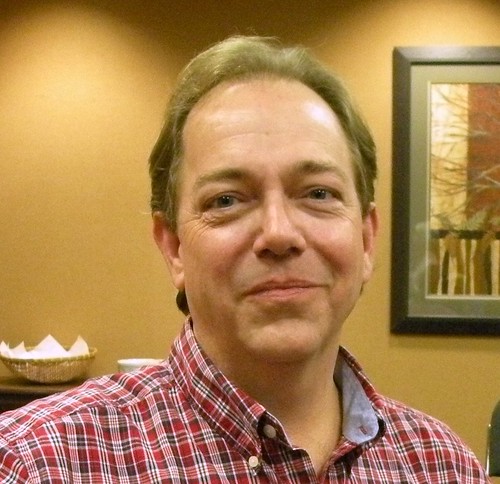

Please click on images to ENLARGE view of David Whitaker at October 19, 2009, meeting of the Washington County Democratic Central Committee in Fayetteville, Arkansas.
Red dirt filling more wetland in the Beaver Lake watershed: Who made decision to build needless fence?
Please click on images to ENLARGE view of red dirt filling wetland on north side of Fifteenth Street during construction of 7-foot metal fence to match the fence around the Baum Stadium and George Cole Field as well as the two mallards who raise their young every year on that pond.
While I am happy to see some men earning money to feed their families, I wonder why the University of Arkansas would spend money (from taxpayers or athletic-department donors) to further damage the environment and reduce habitat for wildlife.


While I am happy to see some men earning money to feed their families, I wonder why the University of Arkansas would spend money (from taxpayers or athletic-department donors) to further damage the environment and reduce habitat for wildlife.


A reader sent this shot email titled 'Another Blow to Wildlife'
Brick and iron fence going around baum stadium pond at the roadside curb.
No more feeding ducks... and how will they walk across to creek?
Thursday, February 18, 2010
Mayor Lioneld Jordan announces streamside-protection seminar/workshops set for March 6 and March 10 in Fayetteville, Arkansas
http://www.flickr.com/photos/7295307@N02/sets/72157623169471734http://www.flickr.com/photos/7295307@N02/
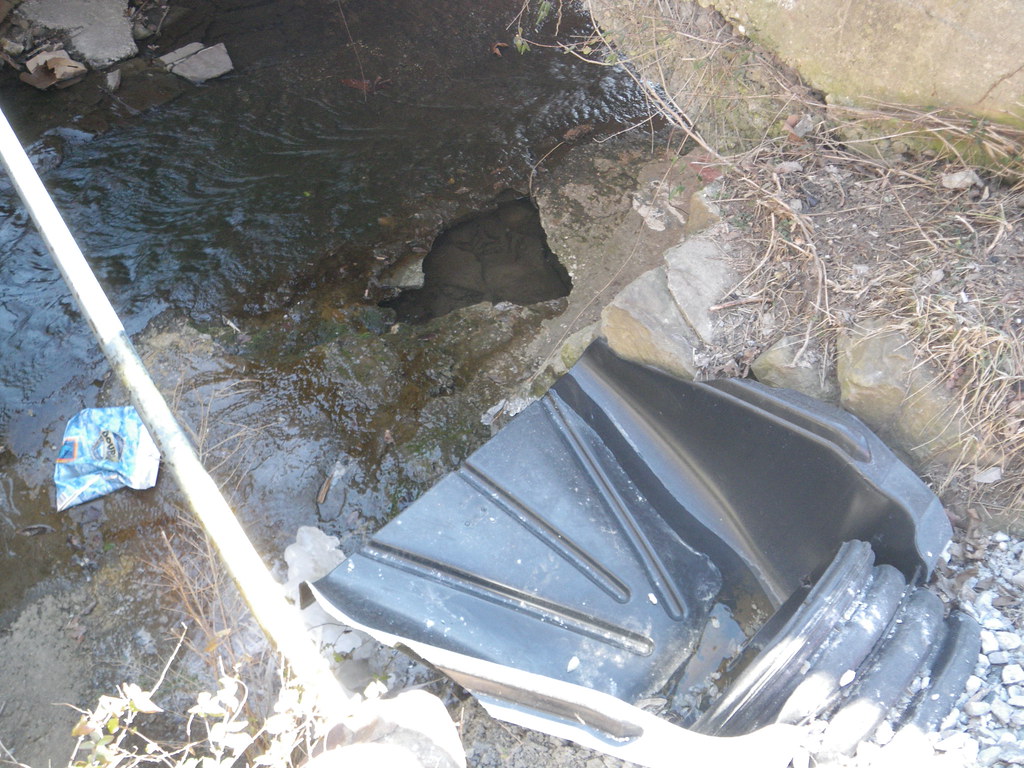
The link above will take you to Flickr photo site for more photos of Tanglewood Branch, one of Fayetteville's at-risk streams in the Town Branch watershed portion of the watershed of Beaver Lake. The construction work shown is being done under old ordinances that encourage curb and gutter and the piping of water directly to streams. Proposed ordinances would encourage street- and sidewalk- and trail-builders to keep the water where it falls to allow it to soak in and be cleansed by the absorbent prairie soil in the riparian and flood-plain portions of our urban streams
The link above will take you to Flickr photo site for more photos of Tanglewood Branch, one of Fayetteville's at-risk streams in the Town Branch watershed portion of the watershed of Beaver Lake. The construction work shown is being done under old ordinances that encourage curb and gutter and the piping of water directly to streams. Proposed ordinances would encourage street- and sidewalk- and trail-builders to keep the water where it falls to allow it to soak in and be cleansed by the absorbent prairie soil in the riparian and flood-plain portions of our urban streams
STREAMSIDE PROTECTION EDUCATION AND INPUT WORKSHOPS (FREE)
The City of Fayetteville will host two public education and input workshops on streamside protection on March 6 and March 10, 2010. The Nutrient Reduction Plan, completed in April 2009 as part of an Agreement with Beaver Water District and the City of Fayetteville, recommends the development and implementation of a streamside protection ordinance. This ordinance is part of a series of recommendations designed to reduce pollution in all the City’s waterways, which will improve the health of the City’s streams and reduce the costs of treating drinking water.
The workshops will include an educational presentation, a policy discussion and followed by a short fieldtrip to College Branch, a local stream located at Martin Luther King Jr. Boulevard and Razorback Avenue. Some of the questions City staff will ask attendees include:
1) What streams should have some sort of buffer protection?
2) What activities should be allowed or prohibited in the protected areas?
Attendees will need to provide their own transportation to the stream site and should wear appropriate clothing for walking along a stream bank. The presentations will be held at the City Administration Building located at 113 W. Mountain Street in Room 111.
Date: Saturday, March 6
Time: 10:00 a.m. - 11:30 a.m.
Place: Room 111, City Administration Building
Date: Wednesday, March 10
Time: 11:30 a.m. – 1:00 p.m.
Place: Room 111, City Administration Building
For more information:
Karen Minkel
Strategic Planning and Internal Consulting Director
(479) 575-8271
kminkel@ci.fayetteville.ar
The workshops will include an educational presentation, a policy discussion and followed by a short fieldtrip to College Branch, a local stream located at Martin Luther King Jr. Boulevard and Razorback Avenue. Some of the questions City staff will ask attendees include:
1) What streams should have some sort of buffer protection?
2) What activities should be allowed or prohibited in the protected areas?
Attendees will need to provide their own transportation to the stream site and should wear appropriate clothing for walking along a stream bank. The presentations will be held at the City Administration Building located at 113 W. Mountain Street in Room 111.
Date: Saturday, March 6
Time: 10:00 a.m. - 11:30 a.m.
Place: Room 111, City Administration Building
Date: Wednesday, March 10
Time: 11:30 a.m. – 1:00 p.m.
Place: Room 111, City Administration Building
For more information:
Karen Minkel
Strategic Planning and Internal Consulting Director
(479) 575-8271
kminkel@ci.fayetteville.ar
Wednesday, February 17, 2010

Joe Neal says woodcock outing set for 5:30 p.m. Saturday, February 29, 2010, at Wedington management area
This is a friendly reminder about the Northwest Arkansas Audubon Society-sponsored field trip to view mating rituals of American Woodcocks. We are meeting woodcock expert David Krementz of the UA-Fayetteville, at 5:30 PM, Saturday February 20, near the Ozark National Forest’s Wedington Small Game Management Area, west of Fayetteville and just east of Siloam Springs. Besides woodcocks, a highlight will be Dr Krementz’s guiding & explaining what’s going on. Road and bridge access from last year are repaired and little walking will be required. Please bring a flashlight (since we will be there until early dark) and a folding chair if you wish. I have previously sent out directions for the meeting place, but I’ll send them again if needed. Email me or call 479-521-1858 for more information.
Tuesday, February 16, 2010
Mark Warren, a member of the CAT staff for several years, was chosen by the Cable Access Channel's board of directors to serve as interim administrator of the station
Mark Warren was named interim administrator of Fayetteville, Arkansas, Cable Access Television station Tuesday night by the CAT board of directors.
Skip Descant was at the PEG CENTER, also known recently as the Fayetteville Television Center, covering the meeting for the Northwest Arkansas Times. The meeting ended by about 9 p.m., suggesting that Descant's story may appear in the Wednesday newspaper. His story should make the paper well worth 50 cents, so get a copy and read it!
Skip Descant was at the PEG CENTER, also known recently as the Fayetteville Television Center, covering the meeting for the Northwest Arkansas Times. The meeting ended by about 9 p.m., suggesting that Descant's story may appear in the Wednesday newspaper. His story should make the paper well worth 50 cents, so get a copy and read it!
Fox sparrows and many other birds still hanging out for handouts at World Peace Wetland Prairie
Please click on images to ENLARGE.


Monday, February 15, 2010
David Whitaker tours congressional district, finishes day in Fayetteville
David Whitaker campaign Web sitePlease click on image to ENLARGE view of young David Whitaker supporters supporting his campaign banner to end Whitaker's daylong tour of his congressional district.
Please click on images to ENLARGE view of David Whitaker at October 19, 2009, meeting of the Washington County Democratic Central Committee in Fayetteville, Arkansas.
Please click on images to ENLARGE view of David Whitaker at October 19, 2009, meeting of the Washington County Democratic Central Committee in Fayetteville, Arkansas.